 Image 1 of 1
Pigment print on textured cotton rag paper
69 x 123 x 4 cm
2024
My work moves between digital and traditional processes. Cameras, scanners and software are combined with painting, drawing and hand-finishing, bringing physicality back into the digital image and turning it again into an object.
I am interested in the possibility of a religious art, and in what we might mean by religious art — or indeed by religion — in the twenty-first century.
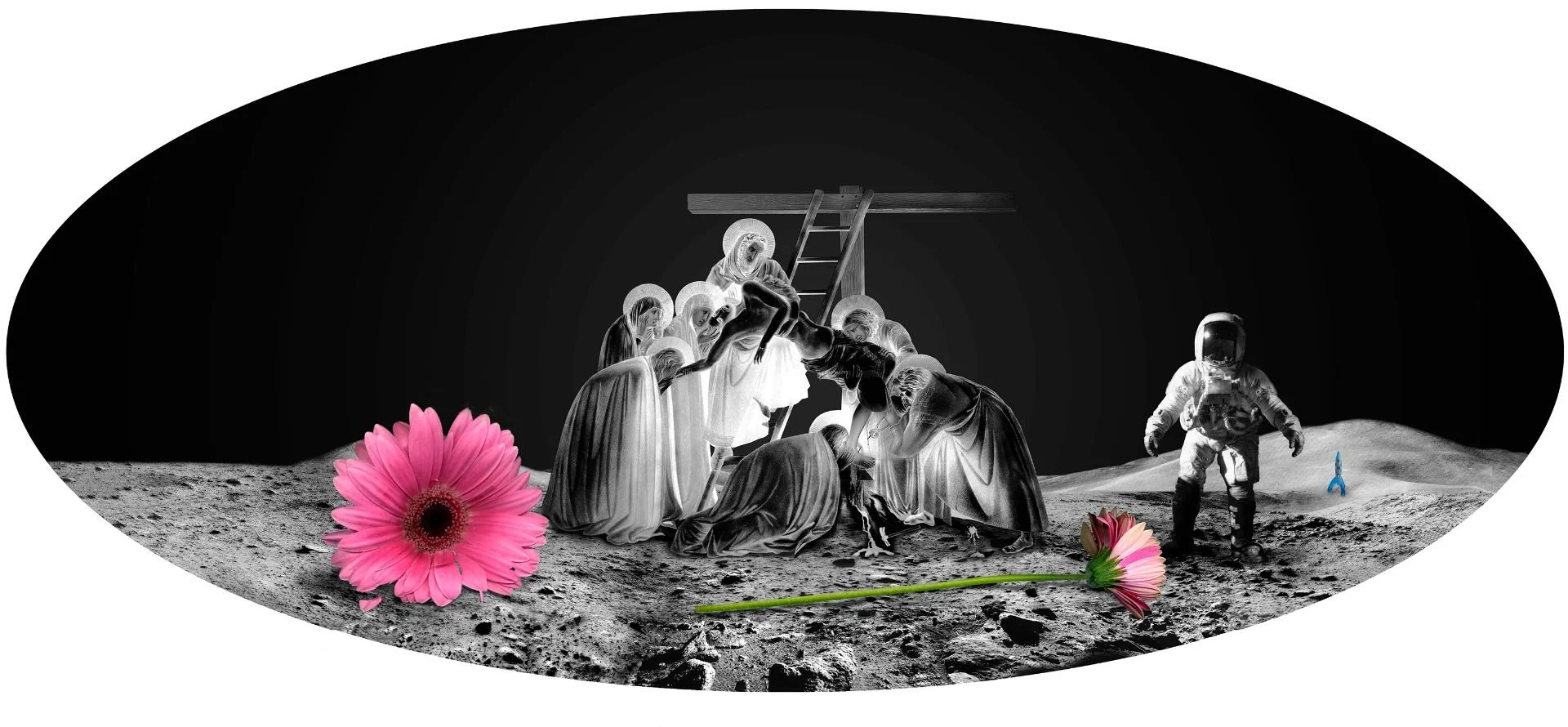
Religious imagery frequently appears in my work, often removed from the context in which we expect to encounter it. I am interested in what happens when familiar images are displaced into other landscapes, cultures or worlds. Can they continue to carry meaning when the ground beneath them has shifted?
There is often humour and absurdity in these encounters, but their intention is also serious. I bring apparently opposing ways of thinking into the same space: belief and disbelief, the sacred and the secular, reverence and irreverence. Rather than resolving these contradictions, I hope the image can hold them together through a kind of visual poetry.
My thinking is influenced by negative theology, with its emphasis on what cannot finally be defined or said. I am also drawn to the parable: layered, indirect and open to interpretation.